The Memory Palace
Once upon a time there was an English professor named Buttigieg. He was new to the Notre Dame faculty and arrived with a reputation as a serious scholar. Since his only son, Pete, hadn’t been born yet, he had lots of time to devote to his writing and teaching. He taught a class in “The Novel,” which attracted the attention of a student who dabbled mostly in creative writing and “journalism-ish” classes. The syllabus was daunting: D.H. Lawrence, Graham Greene, Dickens, Virginia Woolf and Thomas Hardy. Long works. Much too long—I now know—for a 20-year-old with attention span challenges. He did not do well.
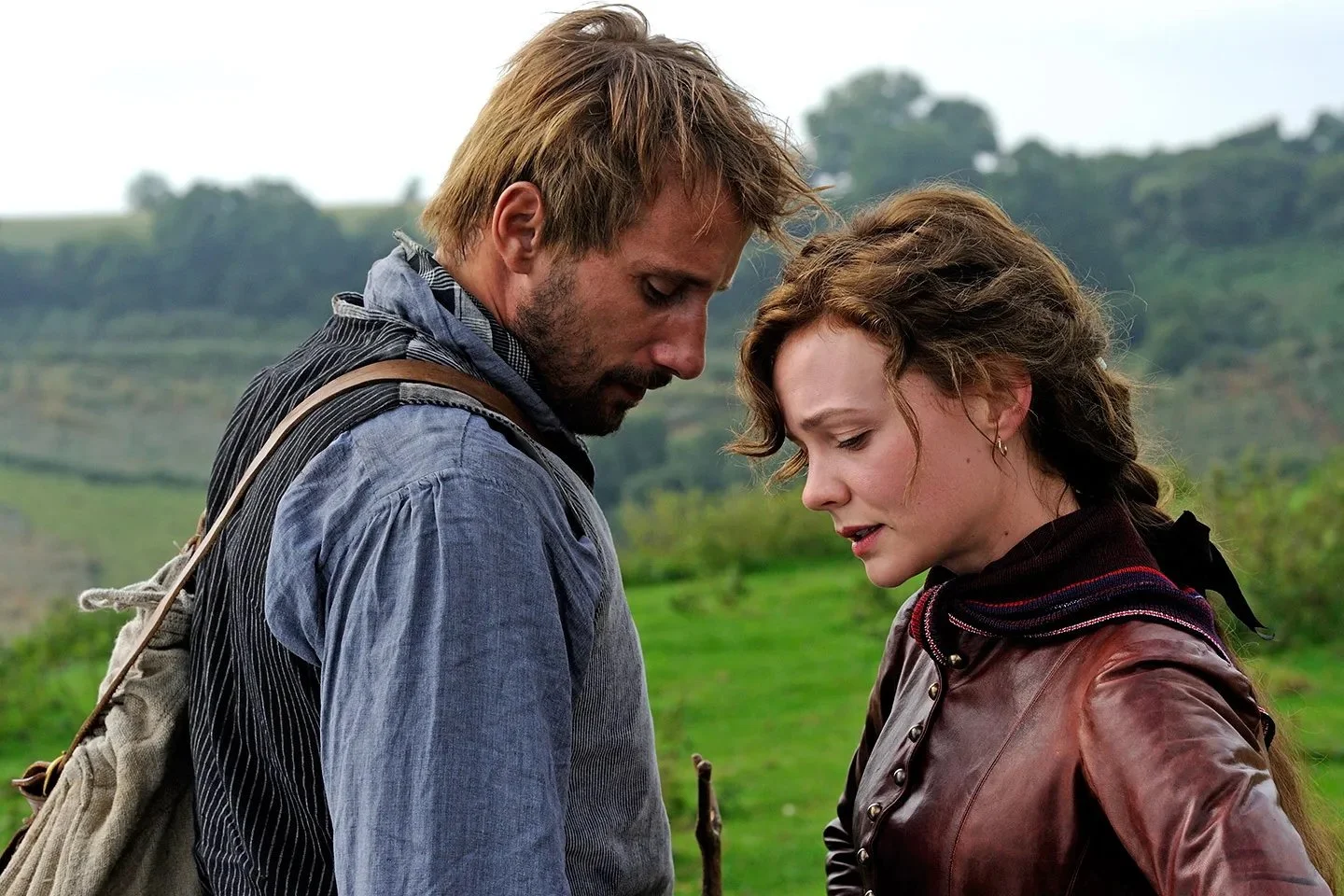
Matthias Schoenaerts and Carey Mulligan in Far From the Madding Crowd (2015).
Most of those 45-year-old books are still on my shelves. Paging through them, I wasn’t surprised to see the underlines and annotations ending halfway (at best) through the volume.
It isn’t easy to revisit one of the lowlights of my academic career. Yet, hope springs eternal. A few weeks ago, I dug out my old copy of Hardy’s Far from the Madding Crowd, ancient annotations and all. This time, I would finish.
Surprisingly, maturity didn’t make it easier. Hardy’s prose can be dense and a bit purple at times. But now I had 21st-century help: An audiobook brought the quirky musical dialogue of the book’s Wessex laborers to fuller life. Carey Mulligan—portraying the heroine Bathsheba Everdene in the lush Thomas Vinterberg film adaptation—gave me a flesh-and-blood figure to match Hardy’s descriptions. But watching the film, I was also struck by what was missing. So much delicious prose, telling details, peculiar minor characters. Yes, I think I’ll keep reading books, Professor Buttegieg.
Icarus revisited.
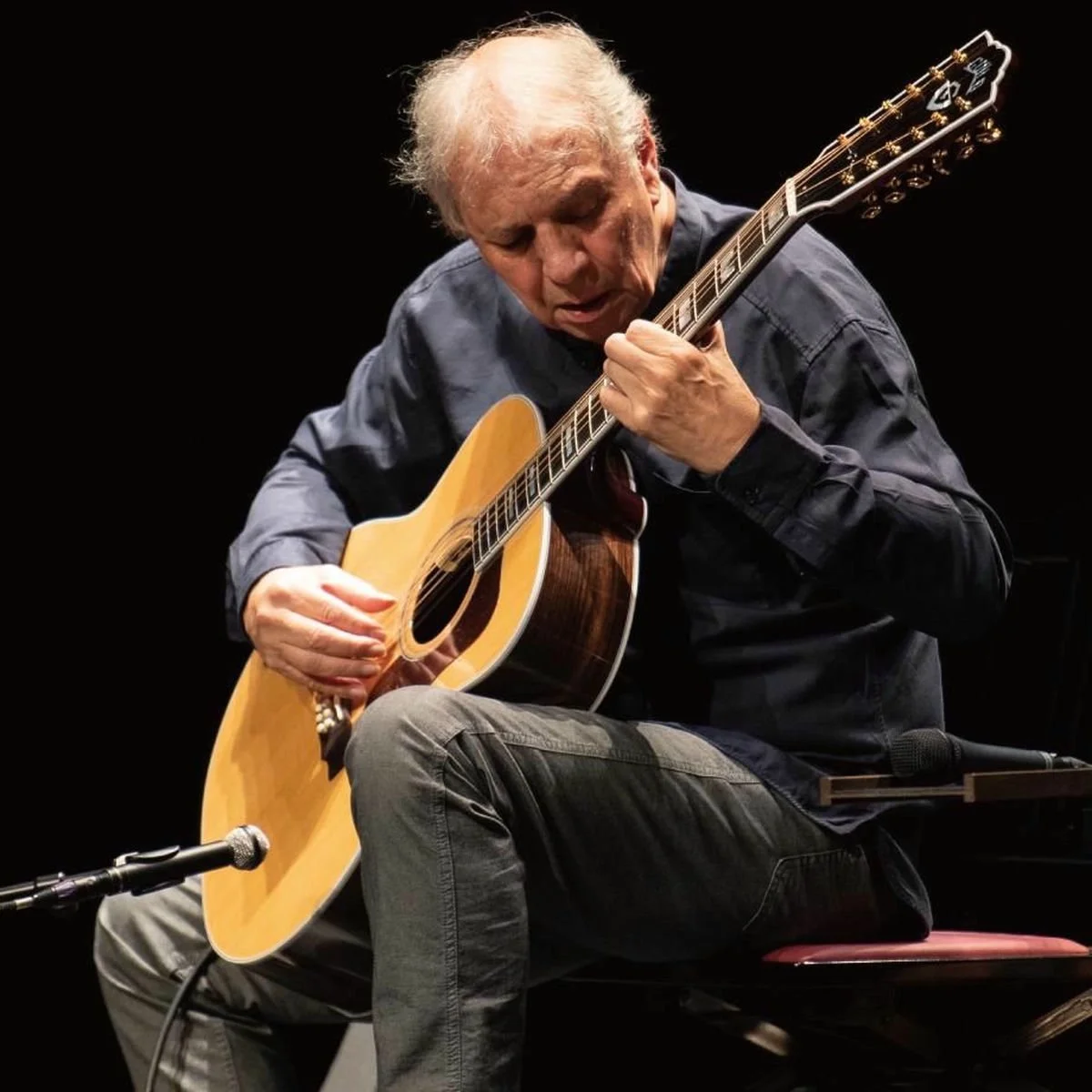
Ralph Towner.
We lost a number of beloved jazz musicians in the last year (Jack DeJohnette, Chuck Mangione, Sheila Jordan, Cleo Laine), but no loss has affected me like the recent passing of Ralph Towner. He hasn’t been on my radar lately, but the news of his death on January 18th has brought me back to some of his beautiful ECM recordings, as well as some personal memories.
Towner started out with the world music ensemble Oregon, but it was his remarkable solo guitar work that caught my attention decades ago. His playing was gentle and meditative—much like the popular Windham Hill artists Alex De Grassi and Will Ackerman—but rooted in jazz and more harmonically complex. He had superb innovative technique, but used it to enrich the music rather than show off. I saw him a few times in New York City’s long gone venue, The Bottom Line. And I relished his solo and duet recordings (often with John Abercrombie) for years after.
Paul B. and yours truly, circa 1982.
I probably sought out Towner because I knew his most famous composition, “Icarus.” In college, the height of my mediocre jazz piano career, I befriended an amazing guitarist who I’ll call Paul B.
Notre Dame—without a true music school—wasn’t a real jazz education mecca, but it did sponsor the Collegiate Jazz Festival, a gathering of top university and conservatory ensembles from around the country. In our senior years Paul B. and I were tapped to perform as a duo and we chose “Icarus” to close our four-song set.
Paul B. was a charming character: a philosophy major who smoked a pipe, had a wry wit and was quite serious about his guitar. After we graduated he was headed to Nashville to pursue studio work and start building his music career. But that summer, a few weeks before his move, he suffered a major heart attack and died.
Towner’s “Icarus” is suited to its title. It swoops and soars, particularly in my favorite recording, which features Towner and vibraphone player Gary Burton. In the Greek myth Icarus and his father, Daedalus, are imprisoned in a tower and escape using wings made of feathers and wax. Flying to freedom, Icarus is warned that the wax will melt if he flies too close to the sun. Captured by the wonder of flight, he ignores the warning and plunges into the sea.
The usual “moral of the story” here is a caution against hubris. Keep your wits about you. Don’t fly too high. But in light of these two personal losses, “Icarus,” for me, has taken on a different moral: Your time (be it 22 or 86 years) is short. Soar while you can.
The Good Old Days
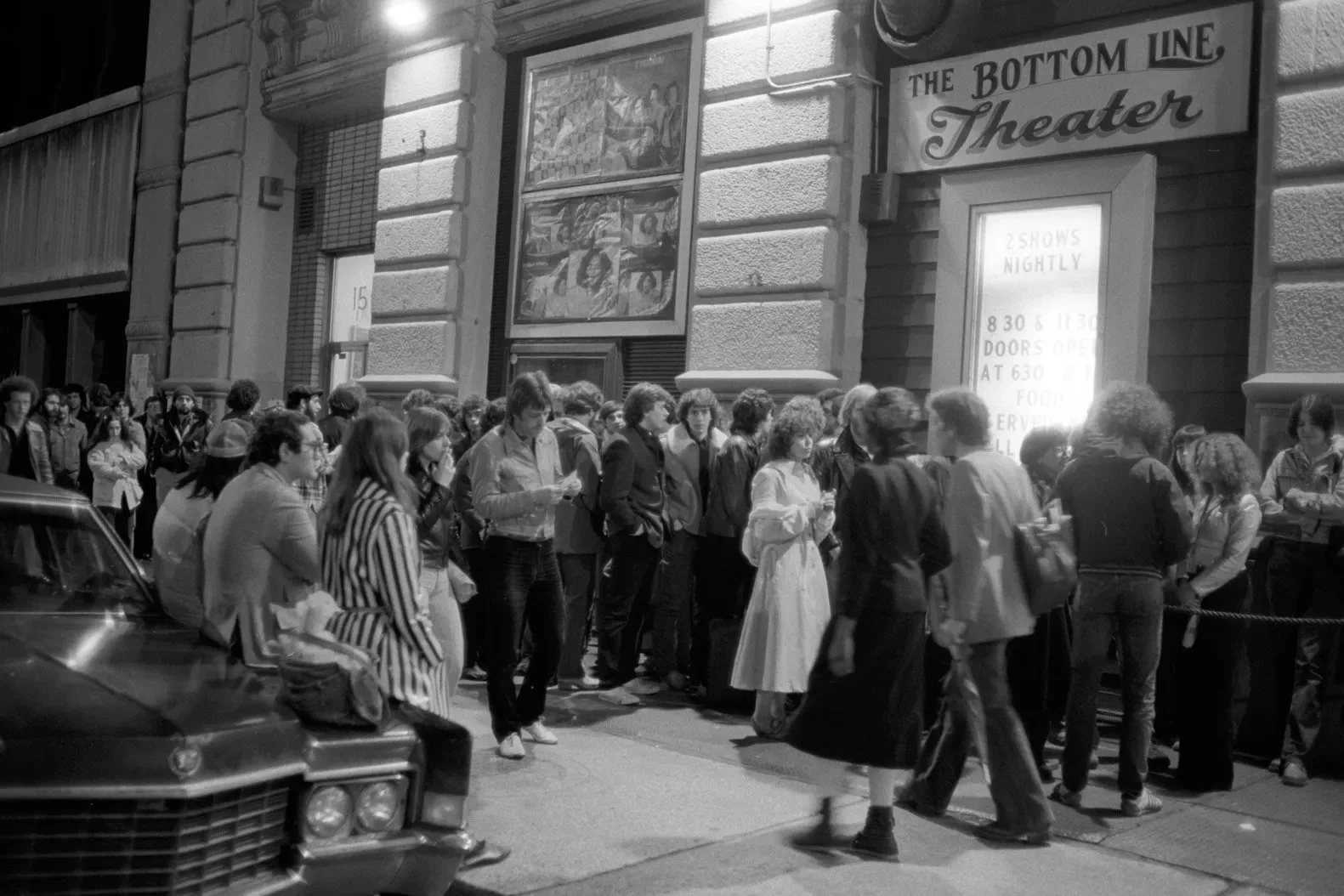
The Bottom Line in its heyday.
What was live music like in New York City in the early 1980s. Here’s a partial roster of the acts that played in the 400 seat club, The Bottom Line, in 1982 and ‘83:
Richard Thompson, The Heath Brothers, Etta Jones, The Art Ensemble of Chicago, Taj Mahal, Arlo Guthrie, Buddy Rich’s Big Band, Sweet Honey in the Rock, John Fahey, Jeff Lorber Fusion, The Roches, Chubby Checker, Lou Reed, Loudon Wainwright III, Marshall Crenshaw, Art Blakey and the Jazz Messengers, Betty Carter, Richard Hell, Bobby McFerrin, Doc and Merle Watson, The Violent Femmes, McCoy Tyner, George Winston, Kenny G, Patti Lupone, John Lee Hooker, Sonny Rollins, Carly Simon, Tom Paxton, Kate And Anna McGarrigle, Henny Youngman, Stevie Ray Vaughn, Phil Woods, Ginger Baker, Bill Monroe, “Weird” Al Yankovic.
Punk to jazz to folk to roots-rock to Henny Youngman(!). I was introduced to a lot of great music back then. A lot of people were. The club was opened in 1974 and hung around for 30 years, although the ‘70s and ‘80s were its golden age. I was glad to be there.
Going for Baroque
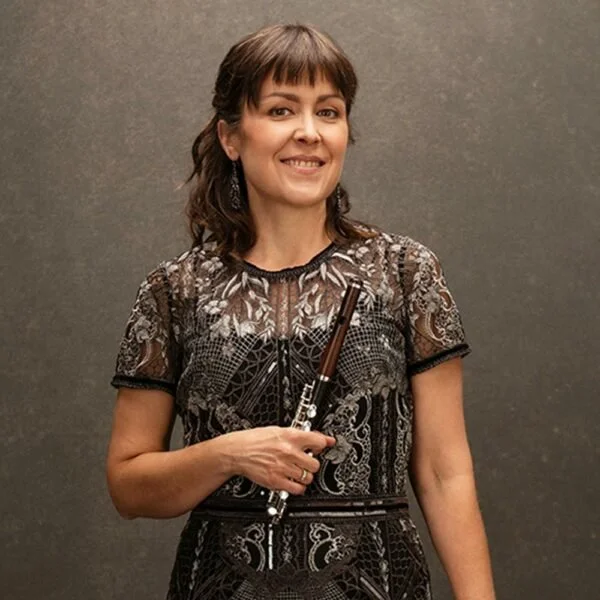
Jennifer Bouton.
“While Jennifer is backstage getting supplemental oxygen, I’d like to say a few things about Bach.” That was Frank Almond introducing the second half of “Baroque Unbound,” Monday’s concert in the Frankly Music series at Schwan Concert Hall. Jennifer Bouton ended the first half of the concert scampering through Antonio Vivaldi’s Concerto in C major for Flautino and Orchestra. A “flautino” is just what the diminutive suffix implies—a little flute—and these days Vivaldi’s three concertos usually feature a small recorder, just like your first grader used to play. Bouton, however, is a master of the piccolo and a particular master of these Vivaldi concertos (she is the first American piccolo player to record them all).
Bouton, who plays flute and Piccolo with the Milwaukee Symphony Orchestra, played another one to open the concert’s second half and her virtuosity was on display throughout both: rapid-fire runs, brisk arpeggios and repeated figures that leap from one end of the instrument’s range to the other. In the Larghetto movement of the second, minor-key piece, she found a tender sense of melancholy, shaping the notes with a gentle attack over quiet, pizzicato strings.
The Bach that Almond introduced was one of Johann Sebastian’s most familiar pieces, the Brandenburg Concerto No. 3. But you haven’t really heard that familiar piece until you’ve seen it. Only then can you relish the way the quick melodies leap from the violins to the violas to the cellos, each section echoing the other. Bach is The unrivaled master of counterpoint (the weaving and overlapping of short motifs to build tension and satisfyingly resolve it) and being able to watch his melodies careen around the ensemble is all the more pleasurable.
Paolo Bordignon, the resident harpsichordist of the New York Philharmonic, opened the concert playing solo pieces by Scarlatti and Bach. By nature, the instrument is delicate and fragile, but he played with intensity and passion.
Jeremy Denk
Ever since I saw him play with the Milwaukee Symphony Orchestra in 2017, Jeremy Denk has been one of my favorite pianists. His career fearlessly embraces a broad spectrum of “classical” music. One recent recording, c.1300–c.2000, is a survey of 700 years of solo piano music (as the title suggests).
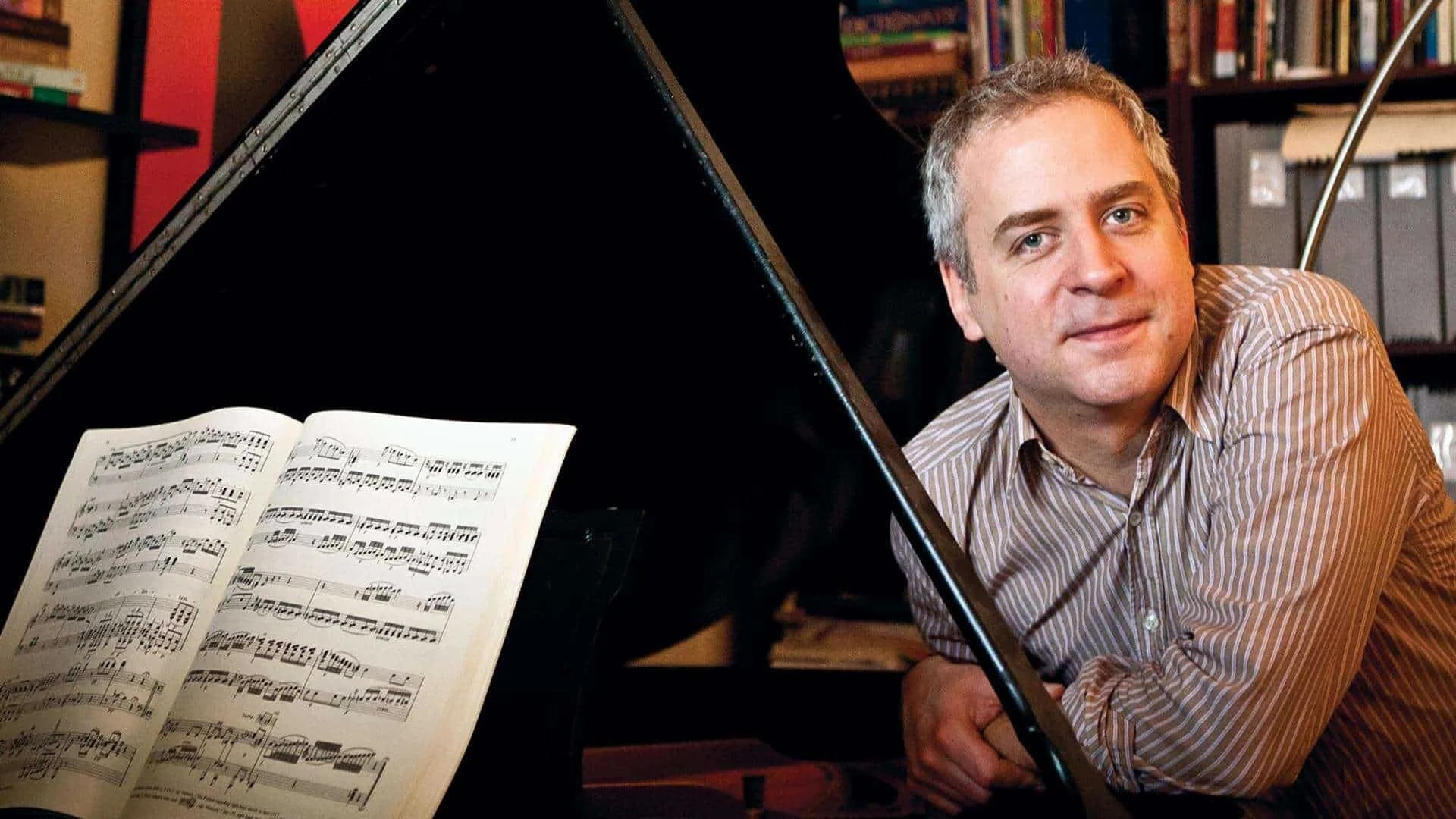
Pianist and author Jeremy Denk.
That kind of project isn’t surprising for Denk, who is both virtuoso and polymath. His book, Every Good Boy Does Fine, is an imaginative personal tour through his life as a musical thinker and performer. He is a frequent essayist in The New York Review of Books and elsewhere. Here are some examples from his recent essay, “Satie’s Spell” about the life and work of composer Erik Satie, whose meditative piano solos (Gymnopédies) are surprisingly prominent in the today’s musical landscape.
They feel as old as sand, but strangely contemporary. To have even a wisp of your music eternally circling people's minds like pollen in the air or a constellation in the night—this is not nothing. Who could have predicted that these brief, evanescent, weightless solo piano pieces would have such a prolonged afterlife?
And later, about the specifics of the hamonies:
You have the feeling that all the most beautiful, most French chords have wandered out of their cages at the classical zoo and, somewhat sedated, are now roaming free across the plains of art with no apparent agenda.
See you next time.