List-o-mania
I once cherished the year-end “special editions” of magazines. Every December, I’d head to the nearest magazine stand to turn to the “back of the book”—where the arts coverage lived—to check out the Top Ten lists: movies, TV, books, albums (remember albums?).
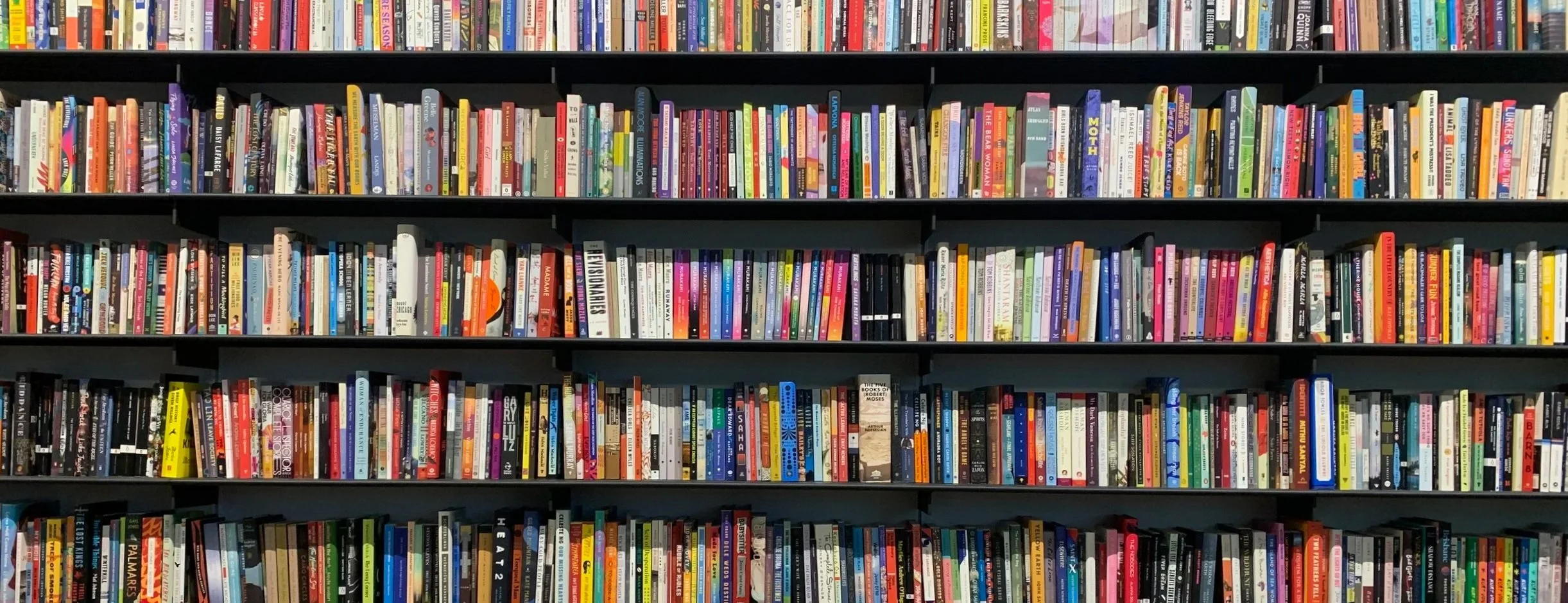
The Best Books of 2025!
They’re still at it, those critics, the few who are still around.. And we’re still curious about their choices, if only to argue with them. The media obviously wants to keep that curiosity alive, so they keep throwing out those Top Ten’s. But lately, the tastemakers have grown a little sheepish. “Who am I to pick only 10?”
I wrote before about the orgy of “watch/read/hear this” recommendations that flood my inbox. But you’d think those year-end Top Ten’s would try to be a little more discerning. Instead, they just keep getting longer. The New York Times once listed a few dozen “notable books.” But in 2004, it expanded its list to the “100 Notable Books” of the year. National Public radio once asked a dozen or so of their reporters and critics to list a few of their favorites, numbering around 75 recommendations in total. This year’s NPR’s “Books We Love” includes favorites from anyone on the staff. It numbers 384 titles.
Not that this is surprising. The Oscars had trouble deciding on 5 Best Picture nominees, so in 2009 they went with 10. Grammy Award categories keep multiplying like fruit flies (at last count there were 96). As professional journalist-critics cede the mediasphere to “This-is-really-cool!” TikTok-ers, it gets harder and harder to wade through the sea of “output” at the end of the year. Sure you can depend on the algorithms to point you in the right direction, but good criticism is about more than recommending something you’ll find palatable. It’s about making cultural connections, exploring trends, helping folks discover why this movie/book/song speaks to us now. I’m sure a few of those 384 titles fit the bill, but which ones?
What’s On?
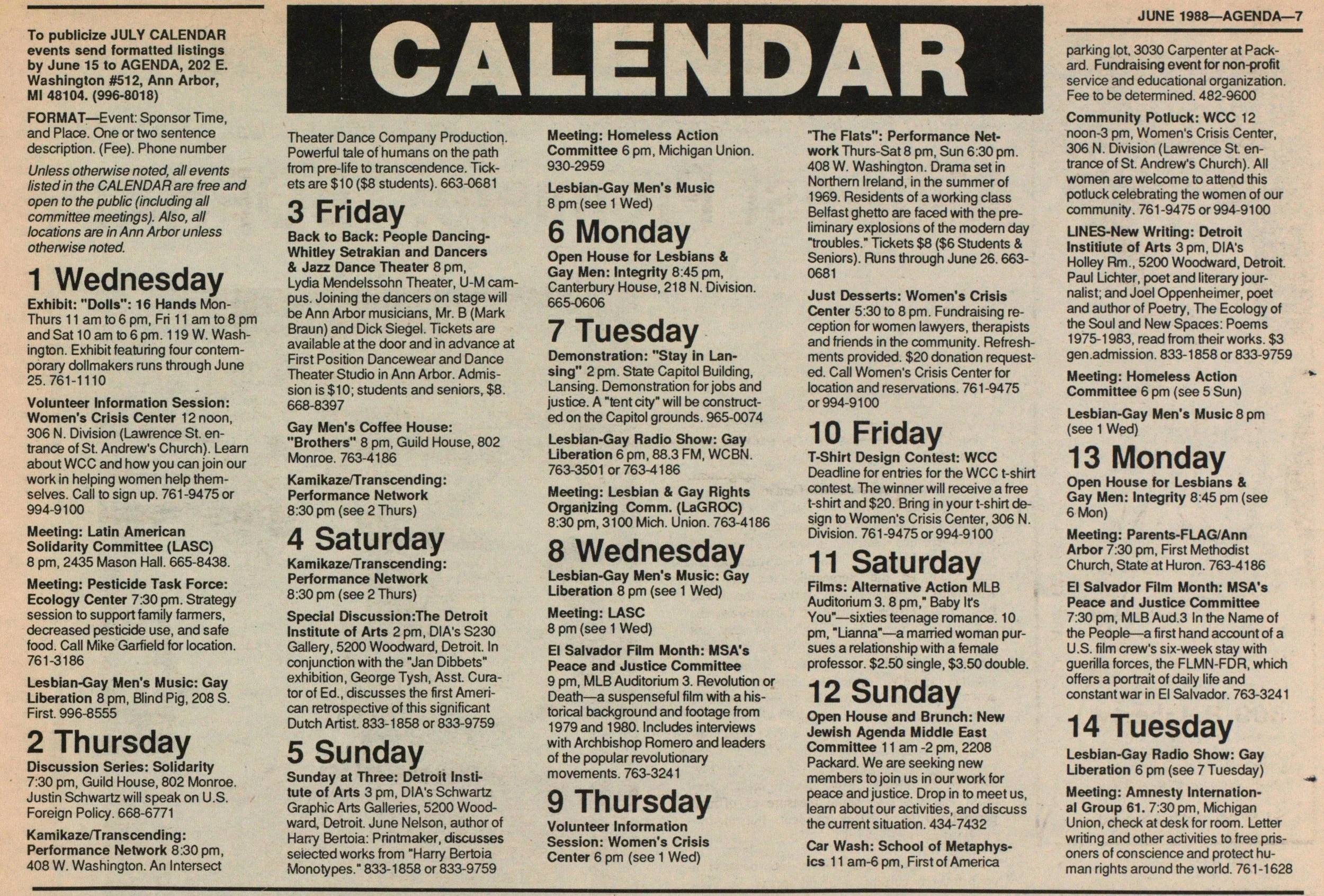
Back in the 1980s…..
Speaking of lists, a recent Atlantic piece by composer/musician Gabriel Kahane curmudgeoned me into a fond memory. Time was, arriving in a city, you could pick up a print publication and comb the listings of concerts, museum shows, plays and general goings-on. If you were really organized, you could even look up things in advance of your visit and plan accordingly. The lists typically included “Critic’s Choices” to point you to events that might be particularly interesting or significant. I spent the early years of my journalism career doing just that: combing the listings and pointing people to events featuring artists and performers who had impressed me in the past.
This was a thing a publication once did, a service to fans and those looking find the wheat amid the chaff and perhaps expand their cultural horizons. But with arts journalists and critics few and far between, it’s increasingly rare, leaving potential audiences to drift toward the tried and true or the organizations or artists with hefty advertising budgets.
But as Kahane laments, the problem is much bigger than the inconvenience of missing a favorite performer. Many of today’s cultural icons spent years haunting dive bars, basement performance spaces and pop-up galleries. Journalists and critics did too, searching for something original and compelling. That’s how discoveries are made: Patti Smith, The Talking Heads, Philip Glass and Sam Shepard—and countless others—found an audience because arts journalists found them first and trumpeted their work until more people took notice. There are still a few publications keeping tabs on the local scenes, but it’s a shadow of what it once was. But generally, we’re on our own if we want to find the Next Big Thing.
Cheap Seats?

So Fi Stadium.
As I write this, Ohio State and Indiana are smashing each other up to claim a number one seed in the college football playoffs. I’m in the comfort of my father’s living room, watching for free—if you don’t count the mental tax of sitting through an hour of cell phone and Taco Bell commercials. But 70,000 have paid major cash to sit in Lucas Oil Stadium in Indianapolis.
How major? For the Big Ten championship, 500 bucks will get you in the door, but to get closer to the action, you’re probably looking at $2000 to $3000.
If you think that’s a little outrageous, I direct you to John Seabrook’s recent piece in The New Yorker, “How the Sports Stadium Went Luxe,” wherein the author describes the once and future excesses of the sports fan “experience.” He starts the history with the 1966 opening of the $35 million Houston Astrodome, featuring—as his colleague Roger Angell wrote—”weatherless baseball played on Chemstrand grass under an acrylic-painted Lucite.”
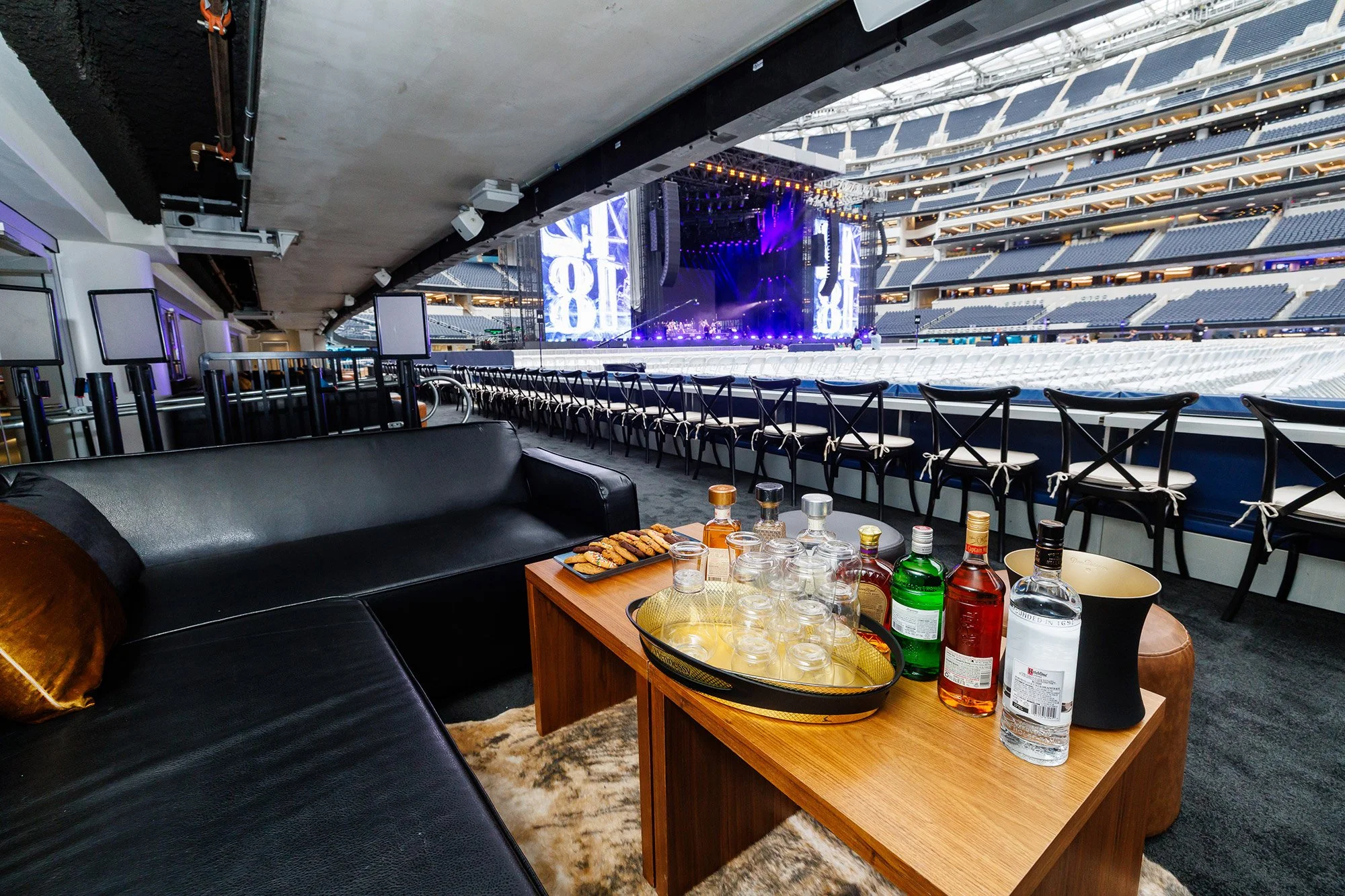
The “Stadium Floor Suite” at SoFi Stadium.
But that was only the beginning. These days, as Seabrook describes, stadiums are playing the Las Vegas game, piling up amenities and ramping up the “fan experience” to seduce the big spenders. He tells of suites offering craft cocktails, sushi and roast beef sliders carved tableside. He accompanied a So-Fi exec to watch a Beyoncé concert from the Google Cloud suite and caught every gyration and melisma on the stadium’s 80-million-pixel Infinity Screen. “The screen houses more than two hundred and sixty speakers and fifty-six 5G wireless antennas that support the building’s robust Wi-Fi,” Seabrook explains, “because it’s not enough to have a premium fan experience—your friends and followers must know that you’re having one, too.” The suite goes for up to $30,000 per event.
Should you think that pro sports value their broad, egalitarian appeal, here’s how the SoFi exec described the stadium “tiers.”
…on every step along an individual’s journey through life they have an opportunity to create an experience that aligns with their place in the world. As they get their first promotion, there’s a spot in the stadium for them to celebrate. When they become a partner in a law firm, there’s a place for them, and as they become C.E.O.s there’s a place, too.
I guess that’s why they call football “America’s Game.”
The Real Thing.

Tom Stoppard.
I first “discovered” Tom Stoppard in 1984 when I scored a cheap ticket to the Broadway production of The Real Thing. It was a perfect introduction, a blend of Stoppard’s erudite, scalpel-like wit and his willingness to dive deep into the pain and absurdities of modern life. Since then, I’ve seen and loved the Stoppard plays that have become part of the standard repertoire: Arcadia, Rosencranz & Guildenstern Are Dead. Not to mention the screenplays he wrote for Brazil, The Russia House, and Shakespeare in Love. Stoppard died on Nov. 29 at the age of 88.
Of course, he is eminently quotable. When asked by a journalist what Rosencranz and Guildenstern Are Dead is about, he answered, “It’s about to make me a lot of money.”
In The Real Inspector Hound, one of my favorites of his “minor” plays, a two critics trade barbs from the audience while they are watching a tired murder-mystery play. One of the opening speeches of the play within-the-play has the maid, Mrs. Drudge, answering the phone as follows:
Hello, the drawing-room of Lady Muldoon’s country residence one morning in early spring….Who? Who did you wish to speak to? I’m afraid there is no one of that name here, this is all very mysterious and I’m sure it’s leading up to something, I hope nothing is amiss for we, that is Lady Muldoon and her houseguests, are here cut off from the world, including Magnus, the wheelchair-ridden half-brother of her ladyship’s husband Lord Albert Muldoon who ten years ago went out for a walk on the cliffs and was never seen again.
Rest in peace.
Top 100 Poems of 2025!!!

Kevin Young.
Not really. I’m much too much of a dilettante of verse to make any calculated judgement. But I can report on a few favorites. Some of Derek Walcott’s poems from his 1984 collection, Midsummer helped me through the chilled early months of winter (many are collected in The Poetry of Derek Walcott, 1948-2013.). I won’t look at the ocean again without thinking of his description: “Abruptly remembering its job, a breaker glazes/the sand that dries fast. For hours, without a heave,/ the sea suspires through the deep lungs of sponges.” I also devoured Diane Seuss’s Frank: sonnets—a fresh and life-drenched memoir of sorts that flows from Michigan farm-life to Manhattan punk and back again. And I also loved Kevin Young’s Night Watch, which includes a soulful reimagining of Dante’s Inferno. Here’s the opening poem from that collection:
Cormorant
Nobody’s Angel—
even your crown, unkempt,
looks like an egret
in an oilslick, inelegant
pelican, diving
down to feed—burnt
goose, orphaned stork,
you skim close
to the water, nigger-
bird we called you, laughing—
I’ve seen you perched
on a stump in a swamp, drying
your waxless wings
raised like a crucifix
unpraised. Black swan, you flood
back to me amont
the memory of my father
driving home, his hands a map
pointing out shacks where Negroes
once lived, now
only timber & anger, still there
for him forever. Besmirched
crow-cousin, dirty seraph,
today you are enough—
you’ll do—if only
I could see you again, hungry,
waiting, at the edge of the bayou.
Happy Holidays. See you again in the New Year.